
Yellow-Legged Hornet Presence in Georgia
The yellow-legged hornet (Vespa velutina), sometimes called the Asian hornet, is an invasive species native to Southeast Asia. Since its accidental introduction to Europe in the early 2000s, it has spread rapidly and caused significant damage to honeybee populations and local ecosystems.
In 2023, the yellow-legged hornet was confirmed in Georgia, marking the first known detection of this invasive species in the United States. Since then, sightings and monitoring efforts have remained a priority, particularly in coastal areas like Savannah, where the climate and landscape can support nesting.
Because Georgia’s agriculture industry relies heavily on pollinators, the continued presence of the yellow-legged hornet remains a serious concern for beekeepers, farmers, and environmental officials.Why the Yellow-Legged Hornet Is a Serious Threat
The yellow-legged hornet is not just another stinging insect. Its behavior and feeding patterns make it especially dangerous to honeybees and native pollinators.
Key risks include:
Declining honeybee populations
Reduced crop pollination
Disruption of local ecosystems
Economic losses for agriculture and beekeeping industries
Early detection and professional removal are critical to preventing the species from becoming permanently established in Georgia.
How to Identify a Yellow-Legged Hornet
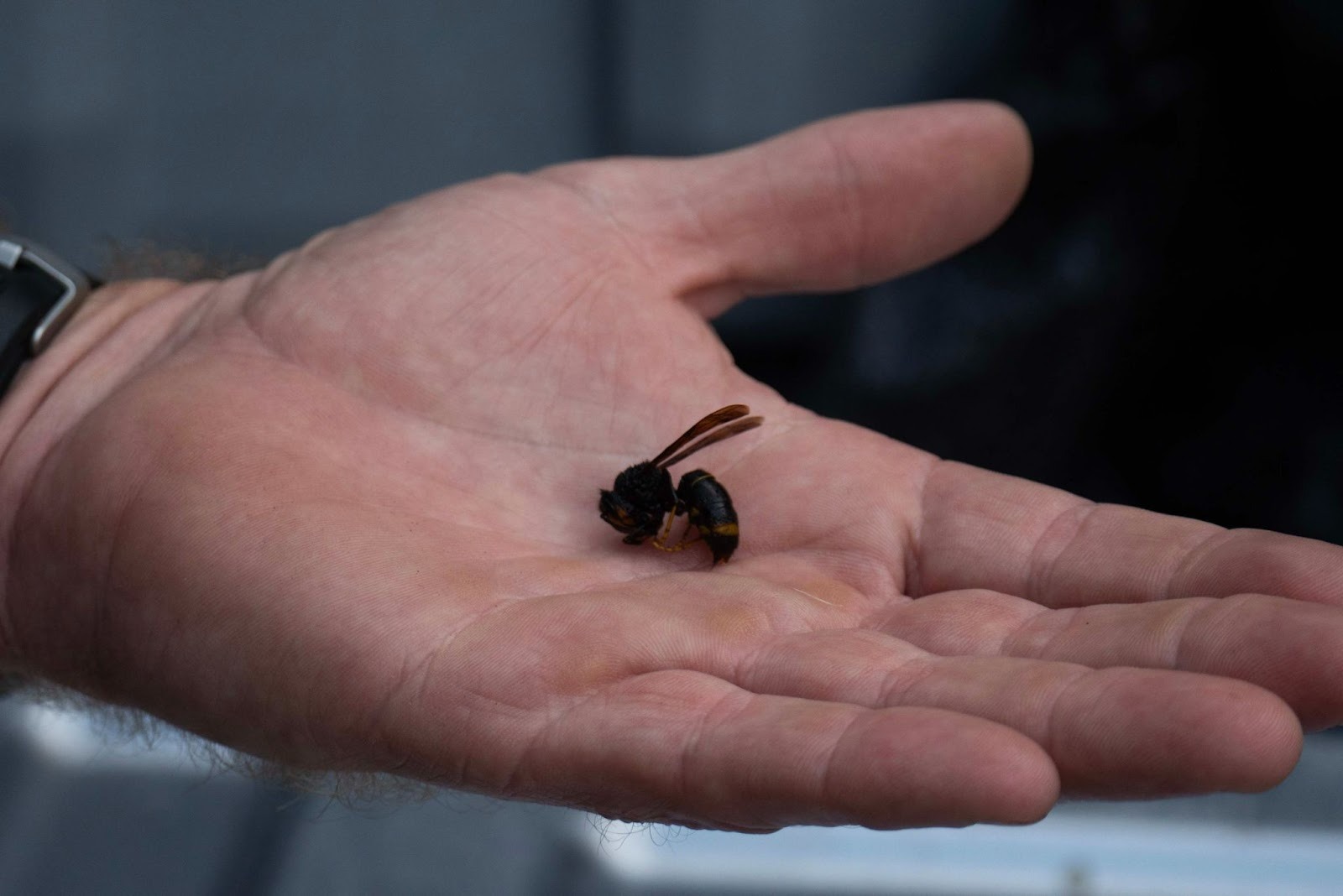
Size and Appearance
Slightly smaller than the Asian giant hornet, growing up to 1.2 inches long
Dark brown or black body
Distinct yellow legs and yellow-orange facial markings
Fast, aggressive flight pattern around beehives
Nesting Behavior
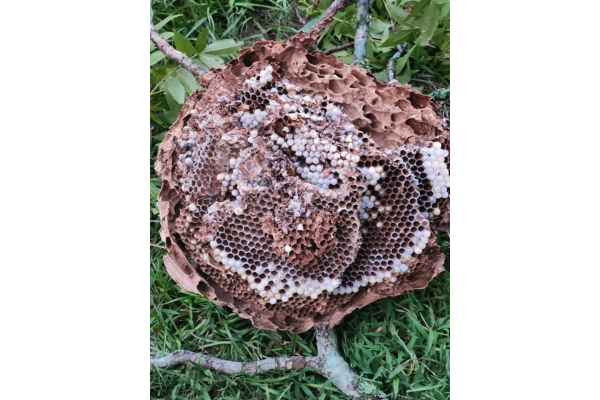
Builds large, paper-like nests
Commonly found high in trees, shrubs, or occasionally on structures
Mature nests can house thousands of hornets
Diet
Predatory and carnivorous
Targets honeybees, wasps, flies, and other beneficial insects
Known to hover outside beehives and ambush foraging bees
Impact on Honeybees and Pollinators
The yellow-legged hornet is particularly dangerous to honeybees. A small number of hornets can devastate an entire hive by:
Capturing bees mid-flight
Feeding bee thoraxes to their larvae
Stressing colonies to the point of collapse
This behavior has already caused major losses in parts of Europe and poses a similar risk if populations spread unchecked in Georgia.
What to Do If You Encounter a Yellow-Legged Hornet Nest
If you believe you have seen a yellow-legged hornet or nest, do not attempt removal yourself. These hornets will aggressively defend their nest and can pose serious safety risks.
Because of the potential impact on Georgia’s agriculture and environment, professional removal is essential.
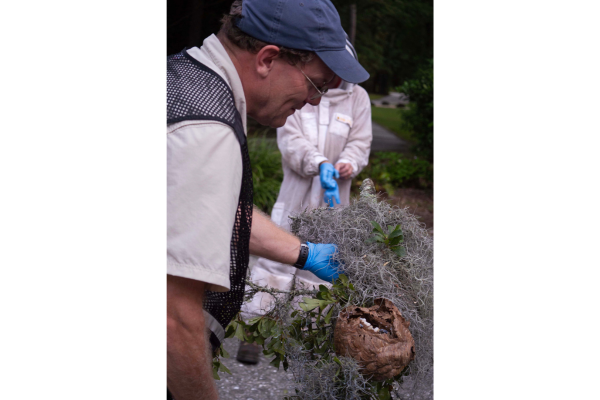
If you suspect a nest on your property:
Keep your distance
Avoid disturbing the area
Contact a licensed pest management professional immediately
Yates-Astro Termite & Pest Control has trained technicians who can inspect suspected nests, identify the insect correctly, and recommend the safest and most effective next steps for removal.
Proven Yellow-Legged Hornet Nest Eradication in Savannah
The spread of the yellow-legged hornet requires fast, experienced intervention. Since its detection in Georgia, Yates-Astro Termite & Pest Control has successfully eradicated more than 100 yellow-legged hornet nests across Savannah and surrounding areas.
This hands-on experience allows our technicians to:
Accurately identify yellow-legged hornet activity
Locate both primary and secondary nests
Safely eliminate nests before populations can spread further
You can see firsthand how these invasive hornet nests are professionally removed in the field in the video below:
**Watch: Yellow-Legged Hornet Nest Removal in Savannah**
https://youtu.be/Uno0ZPAkhxU?si=ZmKCfIrduDBhC0Ba
Attempting removal without professional training can be extremely dangerous and may allow surviving hornets to rebuild. Proper eradication is essential to protect people, pollinators, and Georgia’s agriculture.
Protect Your Property and Georgia’s Pollinators
The yellow-legged hornet remains an ongoing concern for Savannah and the surrounding areas. Prompt action helps protect:
Honeybee populations
Local ecosystems
Georgia’s agriculture industry